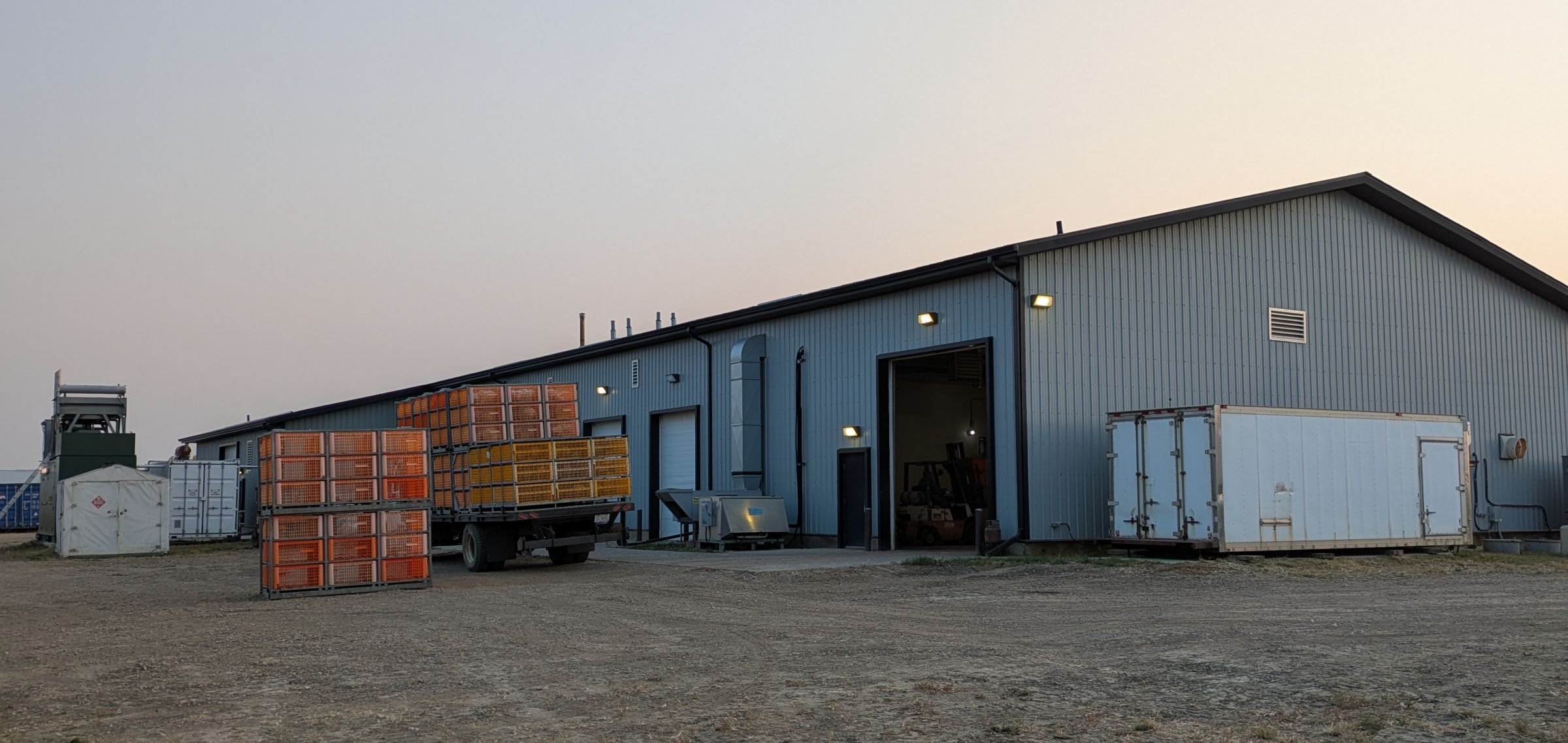
sunworks farm armena alberta canada

This interview was conducted by Andrew Long, Marketing Manager at WrightfieldLAPS, and Ron Hamilton, co-founder of Sunworks Farm in Armena, Alberta, Canada.

In it, Ron shares the story behind Sunworks’ commitment to organic, high-welfare farming. He explains how the Low Atmospheric Pressure Stunning (LAPS) system supports their ethical approach to animal care and gives an insightful backstory into their lives at Sunworks Farm.

Ron, thank you for sitting down with us. To begin, could you tell us a little about your background? What inspired you to start farming, and specifically organic farming?

Ron: From the time I was a kid, I always wanted to be a farmer. Whenever people asked what I wanted to be when I grew up, the answer was always the same: a farmer. Later, working as a surveyor across the Prairies, I met farmers, talked with them, and learned from them—it just deepened that desire.

The turning point came in the early 1990s when my wife Sheila and I faced some health challenges with our children. We realized that if we were ever going to move to the country and raise our family with a rural lifestyle, the time was right. We found this farm here in Armena, Alberta, and we knew it was where we wanted to put down roots.

By 1995–96, we’d converted the land to organic because we didn’t want herbicides or pesticides anywhere near our children or food. We also took a holistic management course that really shaped our vision: looking after the land, raising livestock in a way that worked with nature, and producing real food for our family.

So the beginnings were small—how did the farm grow into the operation it is today?
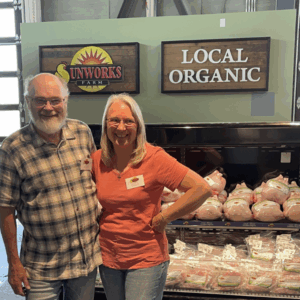
ron and sheila hamilton sunworks farm armena canada
Ron and Sheila Hamilton showing off their high-welfare organic produce

Ron: Our first flock was just 80 chickens, thanks to Sheila’s mom, Dorothy.

The following year, we raised 2,000, which was the maximum without an allotted quota in Alberta. At first, we tried selling through a buyer into the restaurant trade, but when that fell through, we turned to farmers’ markets.

That was the moment we realised people shared our values and there was a strong demand for organic, pasture-raised chicken. From there, it just grew year by year.

“From the time I was a kid, I always wanted to be a farmer.”

Eventually, we needed our own processing facility. Using outside processors two and a half hours away was unsustainable—it cost too much and left us with no margin.

Building our own plant was essential, and it allowed us to control quality, efficiency, and animal welfare.

That brings us to LAPS—the Low Atmospheric Pressure Stunning system. How did it become part of your farm?

Ron: When we set out to build our own plant, I toured processing facilities in England and North America. I spoke to different equipment suppliers, but the costs were staggering. Then we learned Alberta Egg Producers had a LAPS unit for depopulating flocks. We made a deal, brought it here, and honestly—the difference was night and day. Hanging live birds versus using the LAPS stunner couldn’t be more different. The welfare benefit is incredible. Birds are calm, there’s no struggling, and the quality of the carcass is higher.

It’s also simple to operate and very reliable—so much so that the only time we’ve had trouble was when we skipped routine maintenance like filter cleaning. It just works.

How do your customers respond when they hear about the LAPS system?

Ron: We explain it as part of our Certified Humane standards, and people are very receptive. On our annual Farm Day—which we’ve hosted for 25 years—we walk visitors through the process. They see the care we take, and it reassures them.

There’s a lot of scepticism about poultry in general—concerns about interventions, chlorine washes, or welfare during processing. But when people learn how we do things here—organic, free range, Certified Humane, processed right on the farm with LAPS stunning—they understand the difference. Many become lifelong customers.
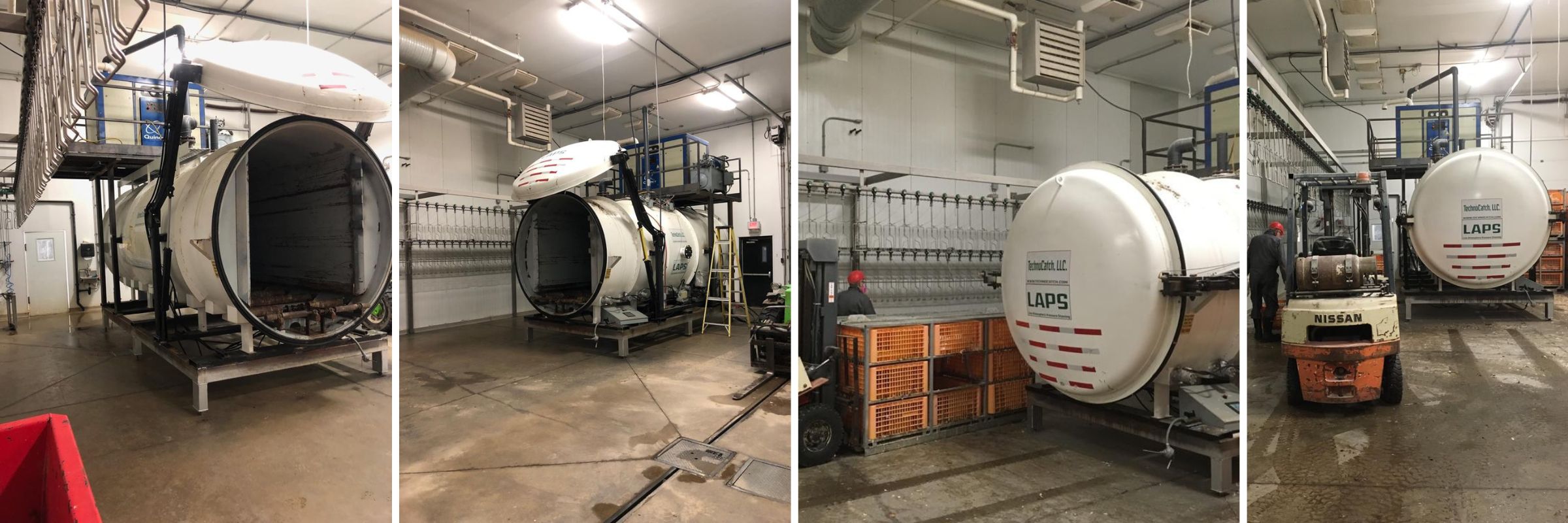
LAPS low atmospheric pressure stunning system on a farm

Sunworks Farm has clearly grown beyond the farmers’ market stall. Can you tell us about the business today?

Ron: We’ve grown steadily—never aiming to conquer the world, just to serve people who want better food. Today, about 85% of what we produce goes direct to consumers through farmers’ markets, online sales, and now our standalone store in Edmonton.

We process around 3,000 birds in just a couple of hours, which fits our scale. Beyond chicken, we’ve built a strong sausage and smoked product line—always with clean ingredients, no fillers, no preservatives. It’s just meat and organic spices.

We now employ 60–70 people and do about $11 million in annual revenue. More importantly, we’ve built generational trust. Families who started buying from us 25 years ago are now raising their children and grandchildren on our food.

Finally, if you could leave people with one message about farming, food, or animals, what would it be?

Ron: We all love happy animals. Find a farmer who genuinely treats their animals with respect. Read labels. Choose clean, real food. Support farming that regenerates the land rather than depleting it.

For us, it comes down to transparency and integrity. Be good to the land, good to the animals, good to your people—and the consumer will trust you. That’s the foundation of Sunworks Farm, and it’s what keeps us moving forward.

We’d like to say a big “thank you” to Ron, Sheila and Colby for allowing us to see their farming operation in such great detail – and for giving us many hours of their time during our visit in September 2025.

You can read the full case study and news article here.