
This report provides a concise overview of Dr. Dorothy McKeegan’s presentation at the 2025 HSA Conference, along with a short Q&A section adapted from the live session. The talk is based entirely on Dr. McKeegan’s independent scientific research, and she holds no commercial affiliation with the LAPS system. It highlights key findings on the science, welfare outcomes, and operational understanding of Low Atmospheric Pressure Stunning (LAPS), offering valuable context for those interested in evidence-based approaches to humane poultry processing.
An Introduction
Good morning everyone, it’s nice to be here to talk about Low Atmospheric Pressure Stunning, or LAPS, in poultry — a welfare practice and its prospects for wider adoption.
Poultry slaughter presents unique challenges in terms of the very large numbers of individuals being processed, the high slaughter rates, and the low individual value of those animals.
Controlled atmosphere stunning (CAS) has become widespread in Europe as a solution to these issues and has replaced electrical stunning in much of it. It involves gradual exposure to carbon dioxide or other gas mixtures in conveyor or pit systems, and it’s very good for welfare in that it avoids the painful pre-stun shackling that’s involved in electrical stunning.
CAS is very reliable and compatible with high throughput, but the induction of unconsciousness is not instantaneous — so there’s a welfare concern around the potential for a negative experiences during the conscious phase.
What’s the scientific basis behind LAPS?
Hypobaric hypoxia is a phenomenon whereby as atmospheric pressure falls, there’s a proportional decrease in oxygen partial pressure — so the availability of oxygen is reduced. You can see that there’s just less oxygen available in the air as we go to high altitude, like going up to the top of a mountain, which is why mountaineers need supplementary oxygen.
This phenomenon is well studied in humans, particularly around pilot training for aviation.
Trials are done to train pilots and other aircrew to recognise the signs of hypobaric hypoxia. What we know is that people exposed to this have a progressive loss of cognitive and motor skills and eventually lose consciousness. Aircrew have to be trained to recognise it because they’re unable to determine that it’s happening to them — they’ll be asked to draw pictures or do simple tasks and be unable to do them without knowing why.
It’s actually a really insidious process, so potentially a very high-welfare way of losing consciousness. That’s why it was examined as a possible method of stunning animals.
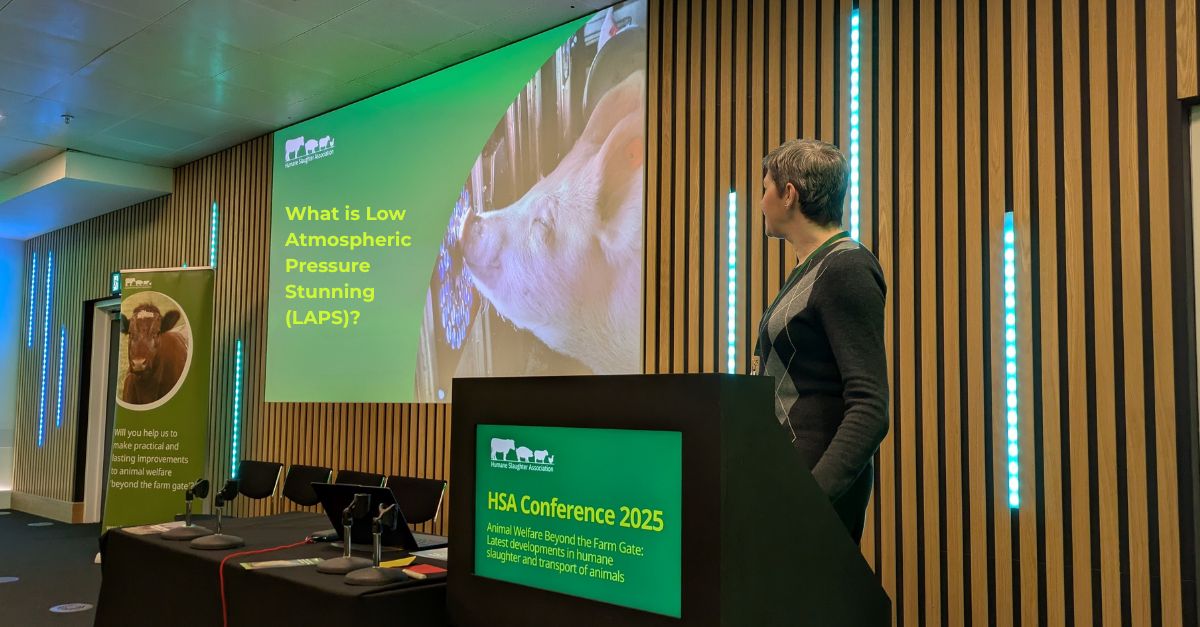
How does the LAPS process work?
LAPS utilises this hypobaric hypoxic effect to create an irreversible stun for poultry.
There’s a sealed chamber where the birds are placed in their transport modules. The doors are closed, and then a pump gradually pulls air out of the chamber to achieve a low-pressure state that induces loss of consciousness.
It’s a 280-second fixed cycle, and there’s a family of decompression curves that are adjusted for ambient temperature and automatically applied depending on conditions — because colder air has more gas molecules, so you have to compensate for density differences.
In a large processing plant, as used in America, you need more than one chamber because it’s a batch system. The birds go all in and all out, so to maintain continuous flow you’d have a bank of chambers used in a staggered fashion.
How was LAPS assessed for animal welfare?
About 15 years ago I got involved in a welfare assessment of LAPS because it was a novel system and there was interest in its welfare credentials. Over several years, we did a range of studies using different approaches to assessing welfare — including spontaneous behaviour, physiological responses like heart rate, and brain activity via the electroencephalogram (EEG).
We looked at when the birds lose consciousness, did analgesic trials to see if any behaviours were pain-related, and investigated environmental factors like ambient temperature and lighting.
What did the LAPS behavioural studies show?
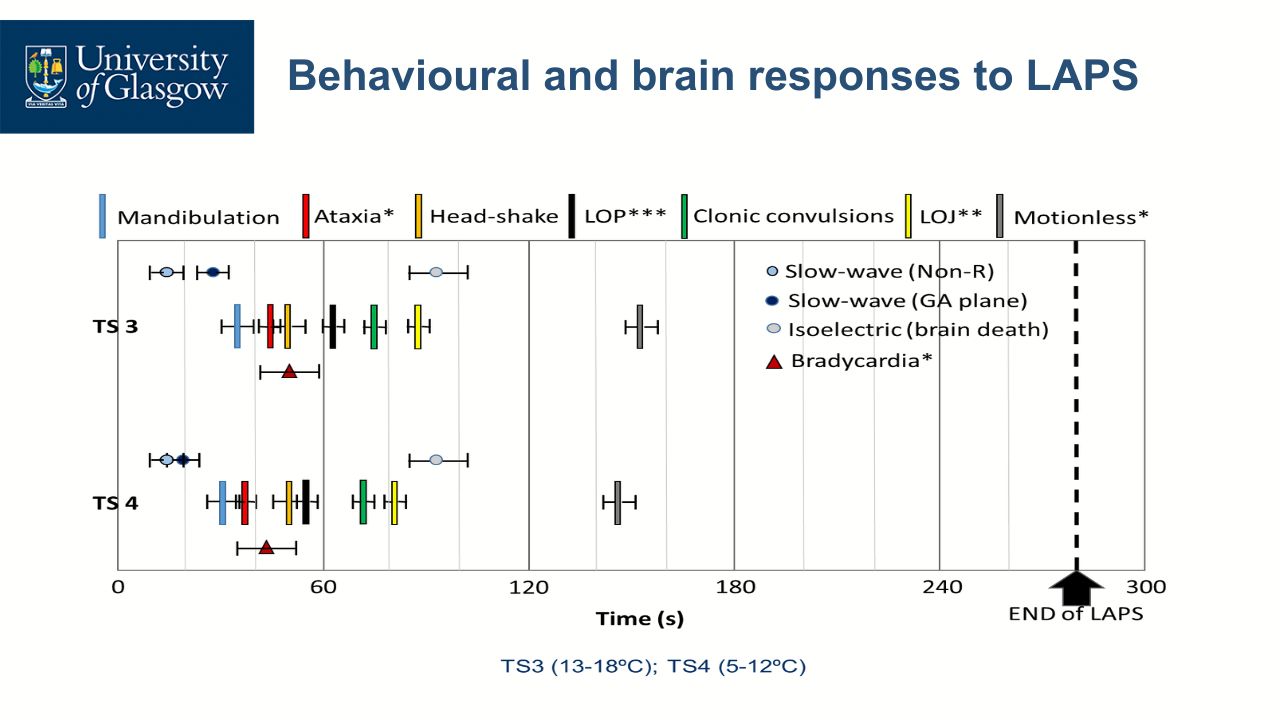
The first behavioural response we saw was a sensory detection of change. Then we saw ataxia, or loss of muscle coordination, followed by loss of posture, a convulsive phase, and finally a motionless state.
This consistent order of events is very similar to what we see with controlled atmosphere stunning with gases.
We also found that the decompression curves compensated well for temperature differences, with only a few seconds’ variation between different ambient conditions.
What did the EEG (brain activity) data reveal for LAPS?
The EEG showed that before LAPS begins, birds have high-frequency brain waves between 20 and 25 Hz — what we’d expect in conscious, awake birds. As soon as LAPS starts, that frequency begins to fall, which corresponds to the process of loss of consciousness.
Later, we see slow-wave, high-amplitude brain activity dominate the EEG — the same as during sleep or unconscious states. It takes about 60 seconds for the birds to reach that point consistently, which aligns with behavioural evidence of loss of posture.
Overall, multiple measures indicate loss of consciousness with LAPS in about 60 seconds and non-recovery within about 180 seconds, so there’s a good safety margin in the 280-second process.
Does LAPS cause stress or aversion before unconsciousness?
We see no signs of distress or escape behaviour in the conscious phase of LAPS. Interestingly, because the LAPS chamber is completely dark, the birds show slow-wave EEG patterns very early in the process — the brain’s natural response to darkness, like a sleepy state. Importantly, this pattern isn’t disrupted during LAPS, which is good evidence that the process is non-aversive.
In welfare terms, we concluded that LAPS appears equivalent to exposure to inert gases (like argon), gradually inducing hypoxia without exposure to hypercapnia. This allows complete avoidance of CO₂, exposure to which is increasingly recognised as a welfare concern.
What regulatory approval has LAPS received?
All of our data, and that from others, was compiled into a dossier for EFSA (the European Food Safety Authority). EFSA rigorously assessed it and, in December 2017, issued a positive opinion on LAPS. LAPS was added to EU Regulation 1099/2009 in 2018, for broilers under 4 kg (as used in the research).
EFSA ranked LAPS as having the lowest welfare hazard among current poultry stunning systems, including all CAS and electrical methods.
LAPS had already been approved in the United States and Canada before then, but the EFSA assessment was by far the most rigorous.
Where is LAPS being used now?
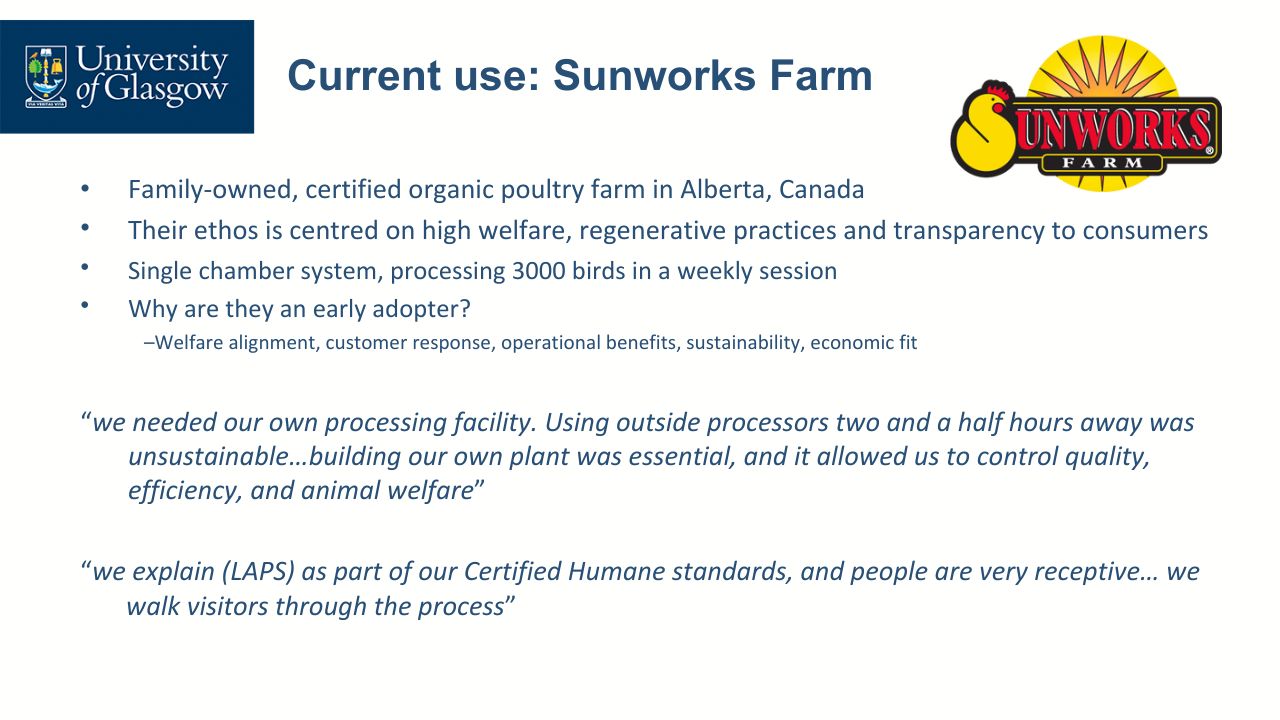
LAPS is currently used in Canada by Sunworks Farm, a family-owned certified organic poultry farm in Alberta. They process about 3,000 birds weekly in a single-chamber system. It aligns with their welfare and sustainability goals, and their customers are very receptive to it once the process is explained.
It allows them to achieve high-quality stunning on-farm without resorting to electrical systems, which would be the usual option at that scale.
Why has commercial uptake in Europe been slow for LAPS?
Although approved, uptake in Europe has been limited. This is partly due to evolving regulatory frameworks — since no one is yet using it commercially, there are no established operational standards or inspection protocols.
There’s also some industry conservatism: LAPS is novel, awareness is limited, and some operators are unfamiliar with its welfare credentials.
Concerns also exist around installation costs, but while the capital investment is significant, that’s also true of gas systems. LAPS has no ongoing gas costs, just electricity for the pumps, and no gas supply issues.
The system automatically adjusts for altitude and temperature, removing human error. Education is important to explain the process clearly, as convulsions can sometimes be misinterpreted as distress (though we know they occur after loss of consciousness).
Are there any meat quality or technical concerns for LAPS?
There are no major meat quality concerns. Some variation in wing damage has been observed, linked to convulsive activity, but results range from similar to slightly higher than other systems — it’s a complex picture.
Operationally, welfare outcomes are equivalent to CAS, without risks associated with gas storage or handling.
What are the main takeaways and next steps for LAPS?
LAPS has undergone an extremely comprehensive welfare assessment — more rigorous than for older systems. It has significant potential to improve poultry welfare worldwide, especially where electrical stunning remains common.
Some barriers remain, but interest is growing among welfare-focused producers, and early adopter plants are exploring implementation.
LAPS is scalable — from small on-farm systems like Sunworks to high-throughput industrial systems.
Research gaps include extending work to other species like hens and turkeys. There’s no reason to expect poorer welfare outcomes, but that must be validated.
With further adoption, LAPS could make a major difference to poultry welfare globally.
Who contributed to the LAPS research?
I’d like to acknowledge all the colleagues and collaborators involved which are reflected in the published work, and the University of Arkansas, Technocatch, and the Humane Slaughter Association, which funded early behavioural work through the Dorothy Sidley Award.
Audience Q&A - post presentation
Q: If the LAPS equipment fails during the cycle, are there welfare impacts?
A: If the system failed partway through, depending on the pressure already achieved then simply holding the pressure in the chamber would cause stunning and then you could recompress as normal. If it failed at the very start of the process, immediate recompression would be recommended and the birds would fully recover. In thousands of cycles, we’ve never seen this happen.