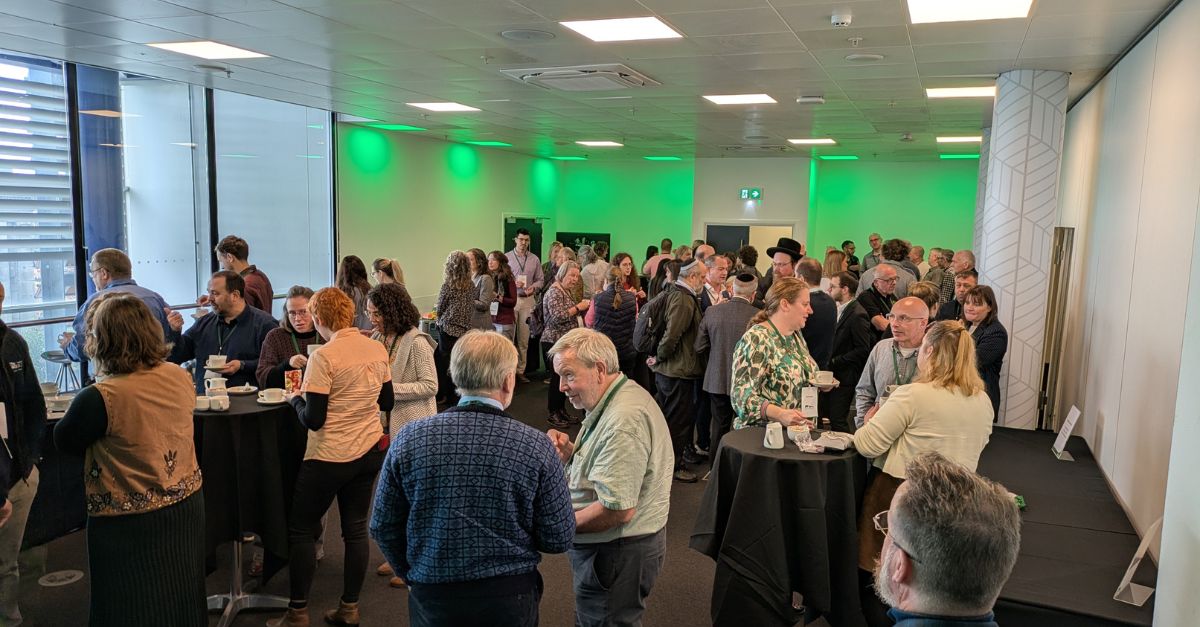
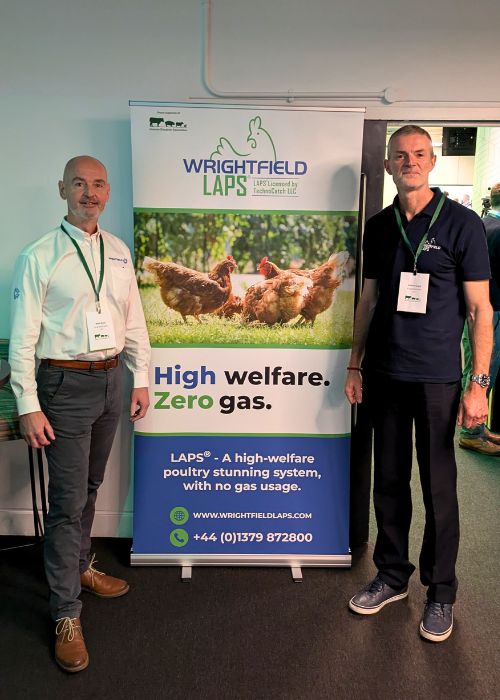
Wrightfield LAPS recently attended and sponsored the Humane Slaughter Association (HSA) Conference 2025, “Animal Welfare Beyond the Farm Gate: Latest Developments in Humane Slaughter & Transport of Animals.” It was an inspiring two days filled with scientific insight, open discussion, and shared commitment to improving animal welfare across the food production chain.
As I reflect on my time at the HSA conference, I can say with some certainty that it was one of the most insightful and valuable industry events we’ve attended this year.
The conference brought together an impressive mix of academics, regulators, producers, retailers, and equipment specialists — all united by a single purpose: to continue improving welfare standards for animals from farm to plate.
A Space for Science, Progress, and Collaboration

The HSA has long been a respected voice in animal welfare, bridging the gap between research and practice.
This year’s sessions highlighted advances in transport welfare, stunning methods, monitoring technologies, and ethical auditing systems, as well as the crucial link between scientific understanding and real-world implementation.
For us at Wrightfield LAPS, it’s an event that goes far beyond technical discussion — it’s about connection and shared responsibility.
Our Sales Director, Mark Rose, and I were proud to represent our team as conference sponsors, meeting with leading voices from across the industry — from academics and regulators to processors, NGOs, and fellow equipment manufacturers.
These are precisely the conversations that move the welfare agenda forward.
“It’s fantastic to see so much enthusiasm for working on what is a challenging but incredibly important area of animal welfare.”
— Huw Golledge, CEO, Humane Slaughter Association
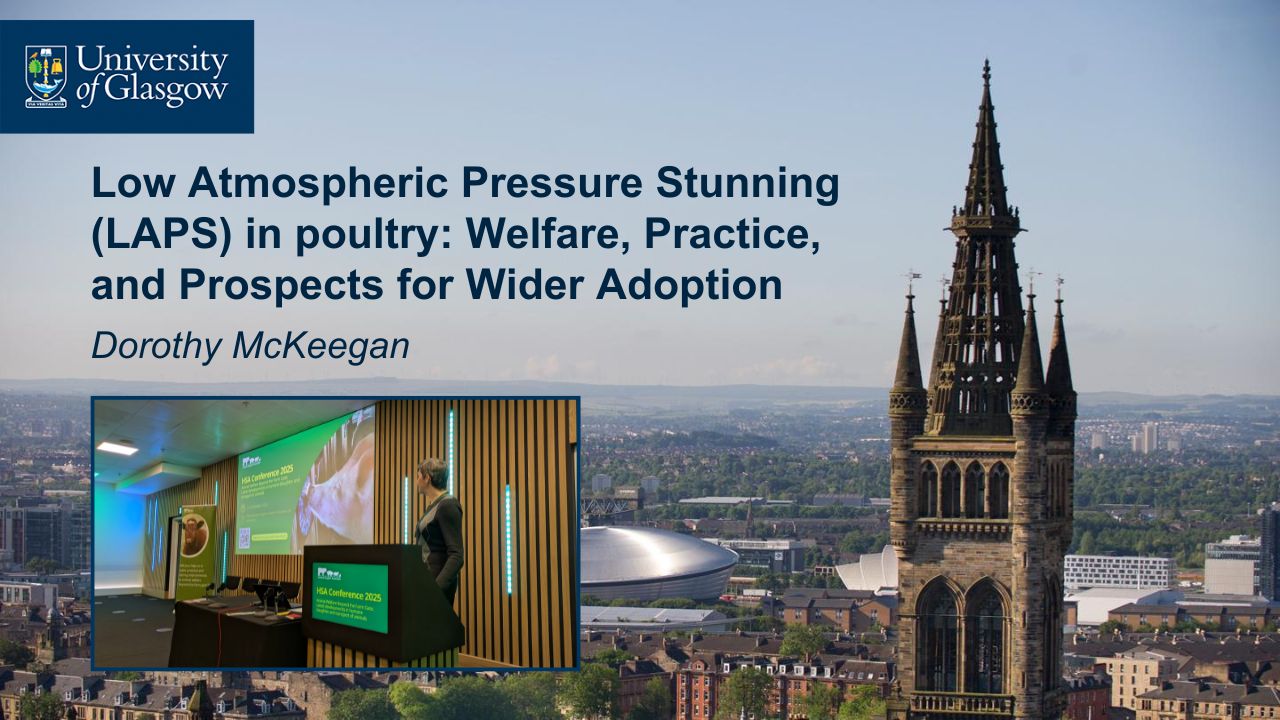
The LAPS Presentation by Dr Dorothy McKeegan
For us, one of the most anticipated talks of the conference came from Dr Dorothy McKeegan, from the University of Glasgow, who presented an independent overview of Low Atmospheric Pressure Stunning (LAPS) — its science, welfare implications, and future potential.
It’s important to note that Dr McKeegan has no commercial connection to Wrightfield LAPS; her work and opinions are based entirely on independent scientific research and animal welfare assessment.
Her presentation explored how LAPS induces unconsciousness in poultry through gradual decompression, without the use of gases such as CO₂ — a process designed to minimise stress, handling, and aversive stimuli. Drawing on years of peer-reviewed research, Dr McKeegan outlined the physiological and behavioural data behind LAPS, explaining that studies have shown that birds lose consciousness calmly within approximately 60 seconds and remain insensible for the entire cycle.
She also highlighted that EFSA’s 2017 scientific opinion found LAPS to have the lowest welfare hazard among current poultry stunning systems. It was both humbling and encouraging to see this work discussed so openly in a room full of experts committed to better outcomes for animals.
Why the HSA Conference Matters
Conferences like the HSA’s are vital in creating a transparent dialogue about welfare in food production. Humane slaughter is not simply a technical topic — it’s a moral and social issue that sits at the heart of responsible food systems.
As consumer awareness grows and retailers push forward with higher welfare standards, it’s more important than ever to ensure that welfare is embedded throughout the entire chain — from farmers and processors to retailers and consumers.
For me, the conference reaffirmed how essential it is that we keep breaking down silos between these groups. Science and technology exist to make real change; the challenge now lies in education, communication, and collaboration.
When farmers, processors, retailers, regulators, and consumers are aligned, humane slaughter isn’t just an aspiration — it becomes the standard.
Looking Ahead
As we left the conference, I felt genuinely inspired by the mix of realism and optimism in every session. The industry isn’t shying away from tough discussions — whether about the economics of welfare investment, the political landscape of regulation, or the ethics of feeding a growing population responsibly.
At Wrightfield LAPS, we’re proud to play a small part in that ongoing dialogue — as innovators, sponsors, and active participants in shaping what better welfare looks like in practice.
We’d like to thank the Humane Slaughter Association, the speakers, organisers, and fellow delegates for a deeply engaging two days.
Andrew Long is the Marketing Manager for Wrightfield LAPS. If you would like to discuss the LAPS system, please email us at sales@wrightfieldlaps.com or call 01379 872800